

HDD Swivels and Pulling Heads
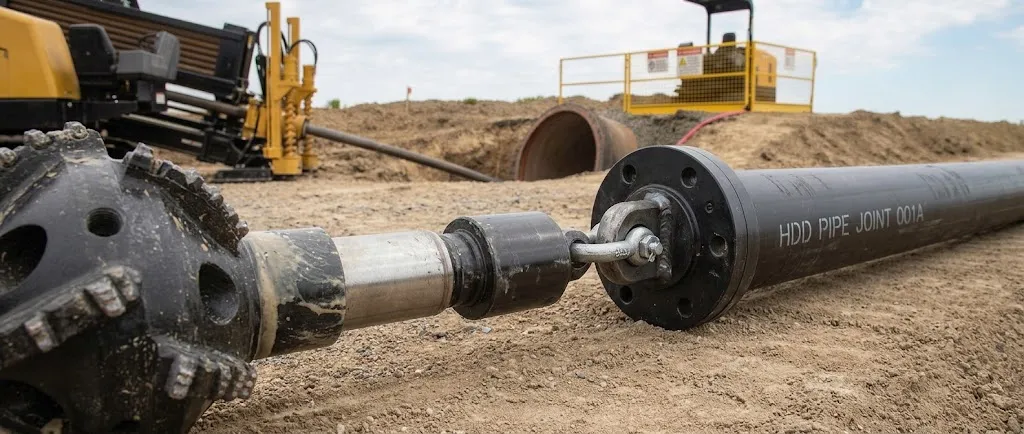
Rotary connectors fitted between the reamer and the product pipe during pullback — they transfer the pull without letting the pipe twist.
Call us to choose the swivel best suited to your machine's pullback capacity and pipe diameter, and to get stock and price information!
+90 533 075 0222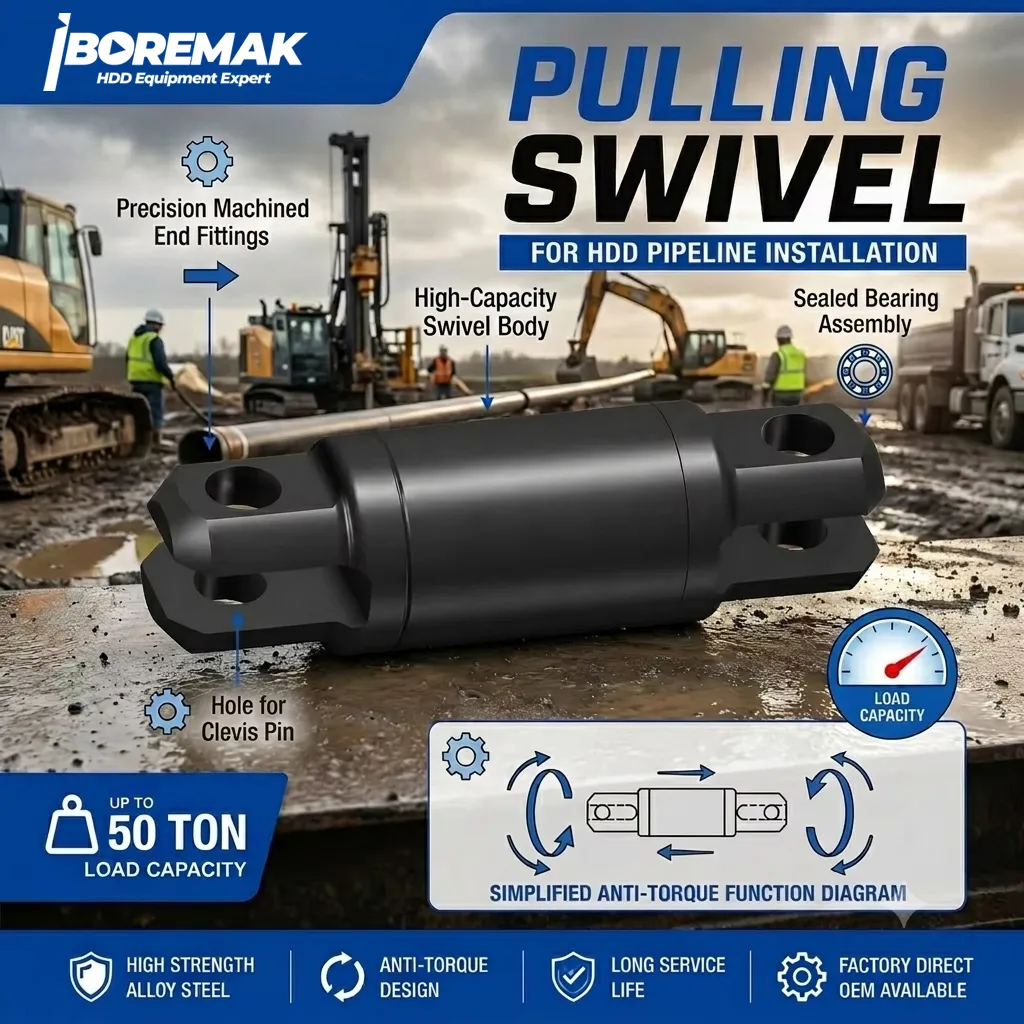
What is a swivel?
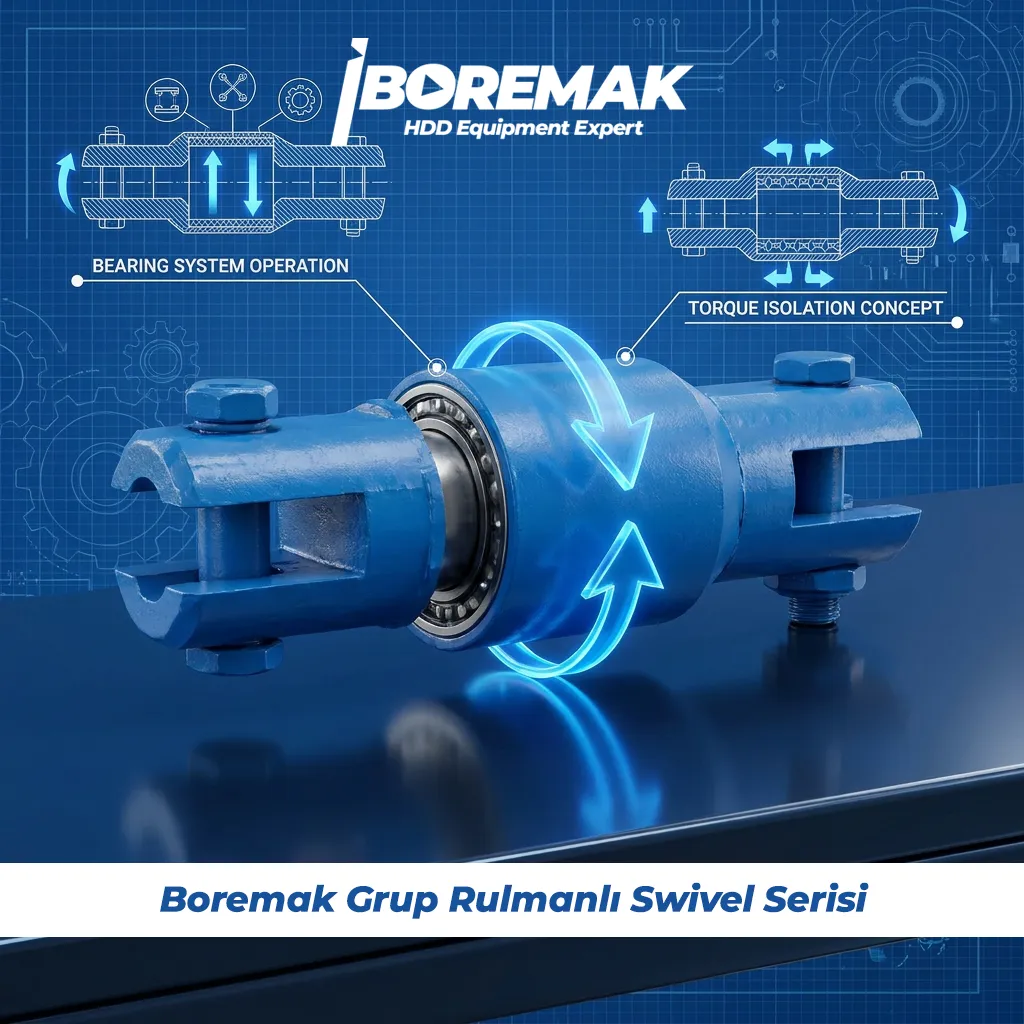
A swivel is the rotary connector fitted between the reamer and the product pipe during the back-reaming and pullback stage of horizontal drilling. One side turns together with the drill string/reamer, while the other side is connected to the product pipe and does not turn. Thanks to the bearing group inside, these two sides turn independently of each other; so while the pullback force is transferred to the pipe, the pipe is kept from twisting.
Without a swivel, the rotating drill string would try to spin the product pipe as well; this means torsion in the pipe, damage at welds and joints, and even the risk of the pipe breaking. A correctly chosen swivel protects the pipe at the most critical moment of the crossing — as the pipe is pulled into the hole — and delivers a smooth pullback. Small as it is, it is one of the parts that determine the safety of the entire crossing.
Why is a swivel used?
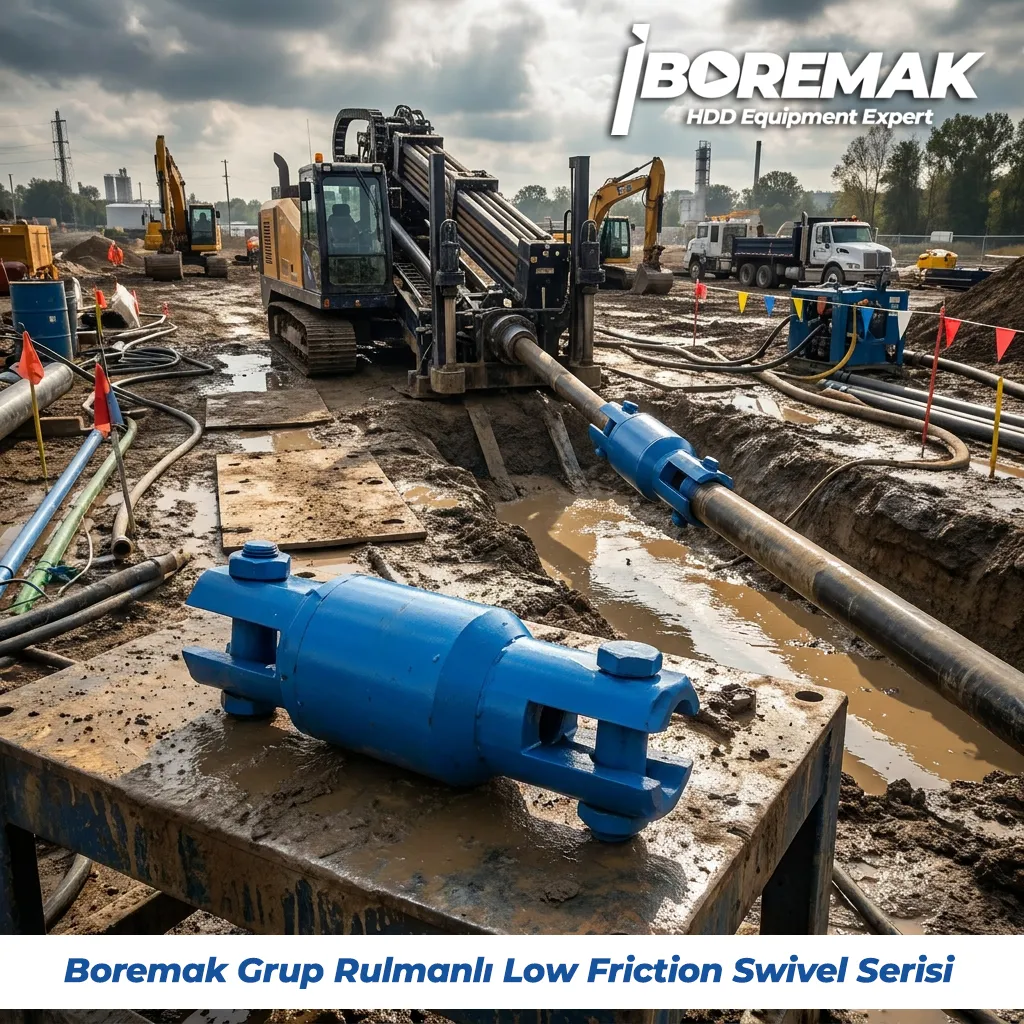
During back-reaming the drill string both rotates and is pulled back; its purpose is to open and clean the hole. But the product pipe (HDPE, steel, etc.) is not meant to join this rotation — a spinning pipe twists on its own axis and weakens, its coating is damaged and its joints can open up.
This is exactly where the swivel steps in: it keeps the rotation on the reamer side and transmits only the axial pullback force to the pipe side. The result is a torsion-free, straight and safe pipe pull.
Especially on long crossings and large-diameter pipes, the swivel — despite being a single small part — is a critical safety element that determines the success of the entire crossing. That is why a swivel is never an "optional" accessory, but an integral part of the pullback equipment.
How it works: the rotating and non-rotating side
A swivel's body consists of two main sections: the rotating side connected to the reamer/rod, and the fixed (non-rotating) side connected to the product pipe. The bearing group between them carries the high axial load while letting the two sides turn freely relative to each other.
The bearing group usually consists of high-load-capacity axial (thrust) bearings; the entire pullback force of the crossing is transferred through these bearings. For this reason the heart of a swivel is its bearing design and sealing — the real engineering is hidden here.
As the reamer turns, the rotating side turns with it; the pipe side stays fixed and is only pulled forward. Thus the rotation and pulling motions are completely separated.
Pullback capacity and choosing the right size
Swivels are classified by pullback capacity (tonnes). The capacity of the chosen swivel must exceed both the maximum pullback force your machine can apply and the actual load expected on the crossing. A swivel with insufficient capacity fails at the moment pulling is hardest, putting the whole crossing at risk.
The right size is determined by your machine's pullback force, the product pipe's diameter and weight, the crossing length and the ground friction. On long, demanding crossings, choosing one capacity class higher is often the smartest choice for the safety margin.
Share your machine's pullback capacity and pipe details; let's determine the swivel in the right pullback class for your project together.
Durable bearings and sealing
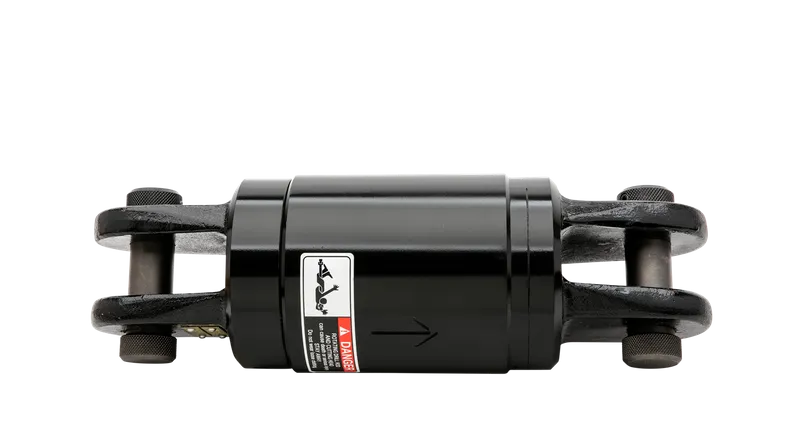
A swivel works under high load in an environment full of mud, sand and water. That is why the sealing of the bearings is vital. In Boremak swivels the bearing group is protected by a robust seal system that keeps abrasive mud from seeping in and grinding the bearings.
The body is made from high-strength steel that withstands high pullback load and impact. The bearings are greasable and, with regular maintenance, run trouble-free for many years.
Good sealing means directly longer bearing life and the prevention of unexpected field failures — because a swivel failure usually appears in the middle of a crossing, at the most costly moment.
Connections and pulling-head compatibility
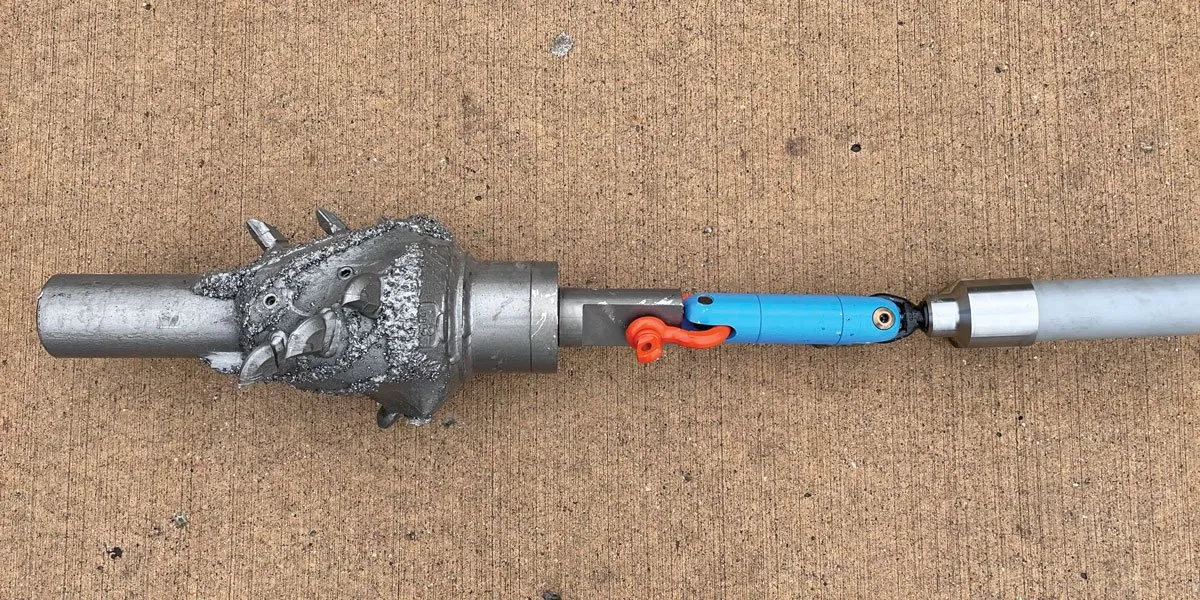
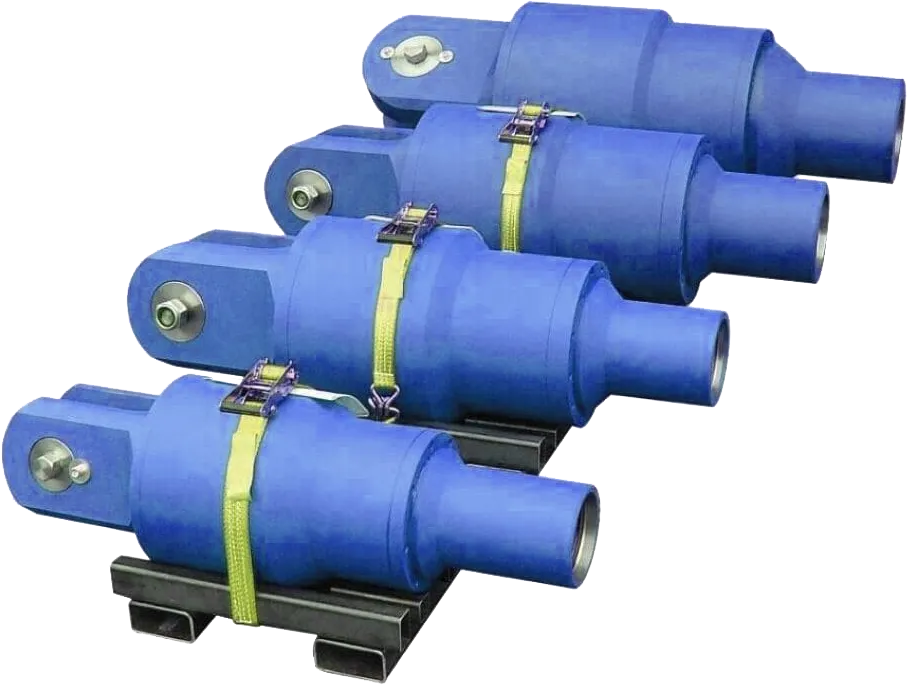
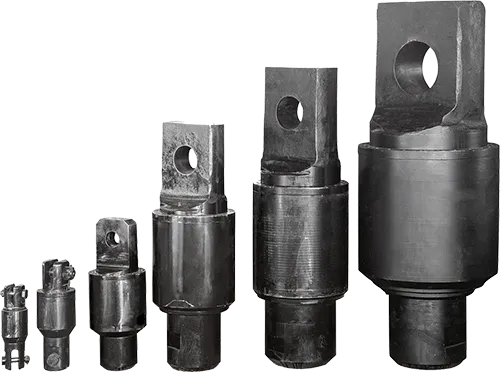
One end of the swivel connects to the reamer/drill string, and the other to the pulling head / grip on the product pipe. Connections can be clevis, box/pin thread or pin–roller type, and are chosen according to your rod brand and pipe type.
The right connection choice eliminates the risk of strain and loosening at the threads and pins during pulling. Choosing the swivel, reamer and pulling head to be compatible with one another is essential for completing the crossing without interruption.
If needed, you can source the suitable pulling head and connection adapters together with the swivel from a single supplier.
Maintenance, long life and selection support
A swivel serves for many years with regular greasing and periodic inspection of its sealing elements. Cleaning and lubrication after each crossing noticeably extend bearing life. When worn seals and bearings are renewed in time, the swivel keeps its day-one performance.
Boremak provides technical support from swivel selection to spare parts and maintenance. Bearings, seals and connection parts are available from stock, so your work doesn't wait in the field.
Share your machine's pullback capacity, pipe diameter and crossing profile; let's determine the most suitable swivel and connection set together.
Share your machine's pullback capacity, pipe diameter and crossing profile; let's determine the swivel and connection set in the right pullback class for your project together.
+90 533 075 0222